A single small red vein on the nose, a network of visible vessels on the cheeks, or clusters of spider veins on the legs. Dilated blood vessels can take many forms, but they have one thing in common: once they appear, they rarely disappear on their own.
Fortunately, these vessels can be removed with precision and minimal disruption to the surrounding skin. We use the high-performance V-Beam vascular laser, which selectively targets the red pigment in the blood within the vessel. The laser energy causes the vessel to close, after which the body gradually absorbs it.
Laser Removal of Dilated Blood Vessels
Vascular lasers are specifically designed to target blood vessels while minimising the effect on the surrounding skin.
The laser beam selectively targets haemoglobin, the red pigment in the blood within the vessel. The light energy is converted into heat, gently and precisely heating the vessel. The treated vessel then closes and is gradually absorbed by the body.
Which Vascular Lesions Can Be Treated?
- Dilated red blood vessels on the face
- Visible vessels around the nose
- Visible vascular networks on the cheeks
- Small blood vessels on the chin or décolletage
- Small superficial veins on the legs
- Blood vessels on other areas of the body
- Congenital flat red vascular birthmarks, known as port-wine stains
- Small vascular lesions (haemangiomas)
- Certain red scars
- Red stretch marks
The V-Beam laser can be used to treat blood vessels measuring approximately up to 2 mm in diameter.
I’d like to remove dilated blood vessels.
When treating more prominent veins on the legs, it is important to distinguish a purely cosmetic concern from an underlying venous condition. If we suspect that visible veins may be related to a deeper venous problem, we recommend an initial assessment at our vascular clinic.

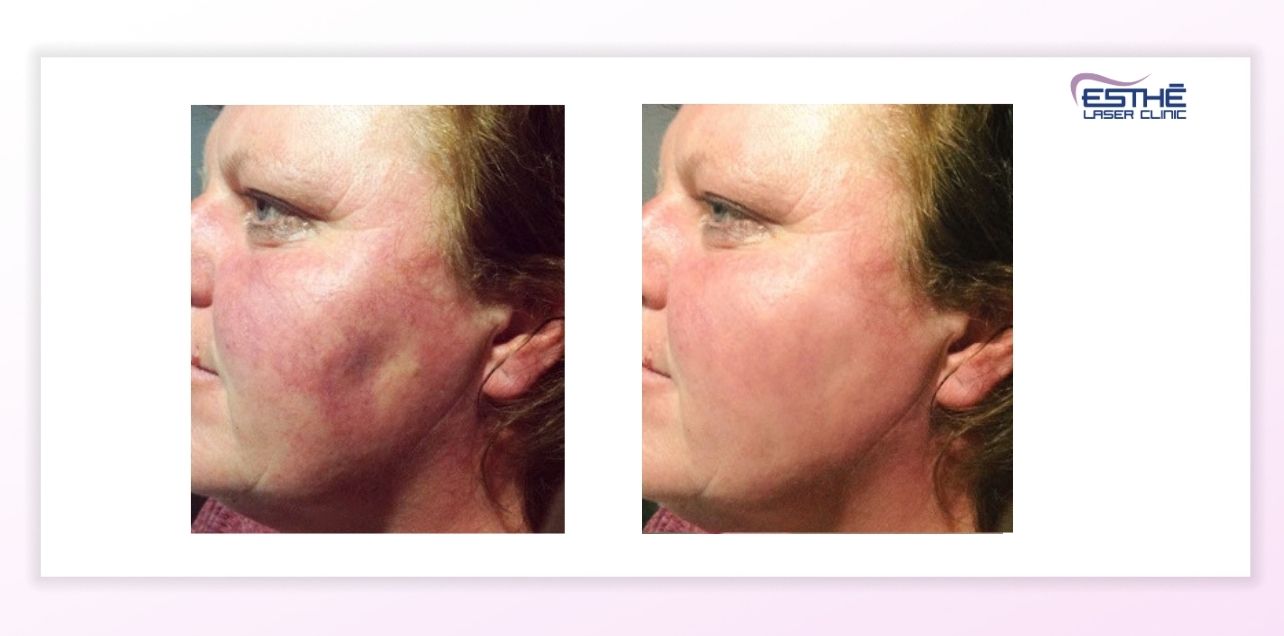
Why Do Dilated Blood Vessels Develop?
When small blood vessels beneath the surface of the skin become dilated, they can become visible through the skin. Sometimes they appear as individual red lines; at other times, they form networks resembling spider webs.
A tendency to develop visible blood vessels can be hereditary, but age and the condition of the skin also play a role. Their visibility may be increased by factors that cause repeated dilation of the blood vessels or place stress on the skin, such as sun exposure and significant temperature changes.
On the cheeks and nose, visible blood vessels may also be associated with couperose or rosacea. It is therefore important to consider the type of vascular lesion being treated and its underlying cause. Once a blood vessel has become visibly dilated, it will generally not disappear through skincare alone. Creams can help soothe sensitive skin, and an appropriate skincare routine may help reduce certain triggers, but an existing visible vessel needs to be treated directly.
How the V-Beam Vascular Laser Works
The V-Beam laser works by selectively targeting blood vessels with laser energy. It emits light that is selectively absorbed by haemoglobin in the blood. The laser energy is converted into heat within the vessel, causing controlled coagulation. The vessel then closes and is gradually absorbed by the body, with some of the breakdown products subsequently cleared through the lymphatic system. The surrounding tissue remains unaffected.
The V-Beam laser is therefore particularly suitable for treating red, superficial blood vessels, diffuse redness and signs of rosacea. Blue or purple vessels indicate that the vessels are located deeper beneath the skin, meaning they are unlikely to respond to V-Beam treatment. In such cases, we may recommend a more detailed vascular examination.
The device is also equipped with a Dynamic Cooling Device (DCD). Immediately before each laser pulse, it cools the surface of the skin, helping to protect the skin and improve treatment comfort.
What to Expect During Treatment of Dilated Blood Vessels
First, the doctor examines the area you would like to have treated and assesses the characteristics, extent and depth of the blood vessels. Based on the findings, the laser settings are adjusted to ensure the treatment is as precise as possible.
The doctor then places the laser handpiece against the individual areas and delivers short pulses of light. You may feel a brief prick or a sensation of warmth during the pulses. Thanks to the cooling system, however, the treatment is well tolerated by most patients.
The duration of the treatment depends mainly on the size of the area being treated. A single small vessel on the nose can naturally be treated much more quickly than a more extensive network of visible vessels on the cheeks or legs.
Book Your Vascular Laser Treatment
When Will You See the Results?
The results of vascular laser treatment are not always immediate. After being treated with the laser, the vessel closes and is then gradually absorbed by the body. Its appearance therefore changes over the following days and weeks. Some vessels may become noticeably darker for around a week after treatment. There is no need to be concerned — this is a normal part of the process. They will gradually fade again as the body absorbs them.
For small vessels, a single treatment may be sufficient. More extensive vascular changes or certain types of vascular lesions may require several treatments. The number of sessions needed depends on the type, number, size and depth of the vessels, as well as the individual response of the skin.
Can Blood Vessels Reappear After Treatment?
A blood vessel that has been successfully closed by the laser and absorbed by the body has been removed. However, laser treatment cannot change your underlying predisposition or prevent new dilated blood vessels from developing in the future.
If you are prone to developing visible blood vessels, they may therefore appear in other areas over time. Prevention is also important, particularly consistent protection from UV radiation and gentle skincare tailored to your skin’s needs. If you are prone to developing red blood vessels, we also recommend avoiding alcohol and significant temperature changes, such as sauna visits or cryotherapy.
If visible veins repeatedly develop on the legs, it is also advisable to consider a vascular examination to rule out an underlying venous condition. Our vascular specialist can assess whether the visible veins may be related to a disorder of the venous system.
I want to get rid of visible blood vessels
Are Dilated Blood Vessels, Couperose and Rosacea the Same Thing?
These terms are often used interchangeably because their visible symptoms can look similar at first glance.
- Dilated blood vessels are individual small blood vessels that become visible beneath the surface of the skin.
- Couperose refers to a condition in which a larger number of small visible blood vessels appear, particularly on the face, often accompanied by skin redness. While a dilated blood vessel may appear as a single isolated “red thread”, couperose typically involves a more extensive network of visible vessels, with the skin tending to develop additional visible vessels over time.
- Rosacea is a chronic skin condition that, in addition to redness and visible blood vessels, may cause burning, increased skin sensitivity, spots, swelling or eye symptoms. If the inflammation is active, the skin should first be calmed before treating the visible vessels. In such cases, we usually begin by treating the rosacea with a combination of topical treatments and biostimulation laser therapy.
This is why it is important to assess the condition of the skin carefully before vascular laser treatment. Based on the findings, we can recommend the most appropriate treatment approach.
- Protect your skin from intense sun exposure and do not come for treatment with a fresh tan. Use SPF 50+ for at least 7 days after the treatment.
- Inform your doctor about any medications you take regularly, as well as any cosmetic or dermatological products you use on the area to be treated.
- After treatment, the skin may be sensitive, red or swollen. Treat it gently and avoid unnecessary irritation.
- For 1–2 days after treatment, avoid exercise, swimming, prolonged baths and exposure to extreme temperatures, including saunas, tanning beds and cryotherapy.
- If a scab forms on the treated area, never pick or remove it.
- Following treatment of blood vessels on the legs, your doctor may recommend wearing compression stockings, depending on the indication.
Pregnancy or breastfeeding, any ongoing infectious disease (everything from a mild cold to active herpes or aphtha is included), recent sunburn, severe photosensitivity or use of medications that increase sensitivity to light, acute venous thrombosis, severe circulatory disorders in the limb, skin healing disorders or untreated skin diseases at the site of the procedure.
FAQ – Frequently Asked Questions About Dilated Blood Vessels
The treatment is well tolerated by most patients. You may feel individual laser pulses as a brief prick or a sensation of warmth. The V-Beam laser is equipped with a dynamic cooling system that helps minimise discomfort during the treatment.
This depends on the number, size, depth and type of blood vessels being treated. A single treatment may be sufficient for a small number of vessels, while more extensive vascular changes may require several sessions. Your doctor will be able to give you a more precise indication after examining your skin.
The skin may be red and slightly swollen. Depending on the type of blood vessels treated and the intensity of the treatment, the reaction may be more pronounced. It is therefore advisable to schedule your treatment with any social or work commitments in mind.
In most cases, yes. This depends on the extent of the treatment and how pronounced your skin’s reaction is. If a larger area of the face is treated, we recommend allowing for the possibility of visible redness or swelling.
Yes, for small superficial blood vessels. However, if the veins are larger, raised or accompanied by other symptoms such as swelling or a feeling of heaviness in the legs, it may be more appropriate to have an assessment by a vascular specialist first. The laser treats superficial visible vessels, but not any underlying condition affecting the deeper venous system. We also treat varicose veins at our clinic. Learn more about varicose vein treatment (link)
A blue or purple colour often indicates larger or more deeply located vessels, for which the standard V-Beam wavelength may not be optimal. Its light is highly absorbed by haemoglobin in superficial vessels, but its effectiveness decreases as the depth and diameter of the vessel increase. For deeper blue veins, vascular lasers with longer wavelengths may therefore be more suitable, as they can penetrate further into the tissue.
A blood vessel that has been successfully treated and closed does not regenerate, but new vessels may develop nearby or in another area. Laser treatment removes the existing visible vessel, but does not change the underlying predisposition to developing new ones.
The vascular laser needs to target the blood vessel precisely. Its energy is absorbed by haemoglobin, the red pigment in the blood within the vessel. Tanned skin contains more melanin, which can also absorb some of the laser energy. This makes it more difficult for the laser to distinguish between the blood vessel and the surrounding tissue and increases the risk of unwanted skin reactions, such as irritation or changes in pigmentation. For this reason, treatment is safest and most precise on untanned skin.
It may, but the underlying cause of the redness should first be established. Visible blood vessels may be an isolated cosmetic concern, part of couperose, or one of the symptoms of rosacea. Your doctor will assess your skin and recommend whether vascular laser treatment is appropriate and what results can realistically be expected. Laser treatment and other dermatological therapies cannot treat so-called reactive flushing caused by factors such as stress or exercise, as this is related to the function of the nervous system.
Price list
| Enlarged blood vessels – V-Beam laser | Price |
|---|---|
| initial examination (paid only on the 1st visit) | 500 CZK |
| test procedure | 600 CZK |
| minor procedure | 2,900 CZK |
| medium procedure | 3,700 CZK |
| major procedure | 5,700 CZK |
