Moles, freckles, birthmarks and pigmentation marks are a common part of human skin. Most of them are completely harmless, but some may gradually develop into a malignant skin tumour — melanoma. This is why it is important to monitor moles regularly and have them examined by a specialist.
During our skin cancer prevention consultation, we use a digital dermatoscope that can magnify the skin and its moles by up to 200 times.
When Should You Have Your Moles Checked?
We recommend a preventive examination once a year. This recommendation becomes even more important if:
- a mole is growing, darkening, or changing shape
- it itches, bleeds, peels, or forms scabs
- one mole looks noticeably different from the others — the so-called “ugly duckling” sign
- new moles are appearing, or you have a large number of moles
- melanoma or other skin cancers have occurred in your family
- you have fair skin and burn easily in the sun
WHAT IS DIGITAL DERMOSCOPY AND HOW DOES IT WORK?
Digital dermoscopy is a non-invasive diagnostic method that uses a specialised optical device — a dermatoscope — connected to a computer system. Unlike a standard examination with the naked eye, a dermatoscope can reveal fine pigment structures, vascular patterns, and irregularities that may indicate a potentially risky change.
Another major advantage of digital dermoscopy is the ability to monitor moles over time. The images taken during the examination can be stored in your medical records and compared at future check-ups. This allows us to detect even very subtle changes in their appearance.
What Happens During a birthmark Examination?
The examination is quick, painless, and non-invasive. Your doctor will first assess your skin with an experienced eye and then examine selected individual moles using a digital dermatoscope. If a suspicious lesion is found, the doctor will recommend the next steps — for example, preventive removal and histological examination.
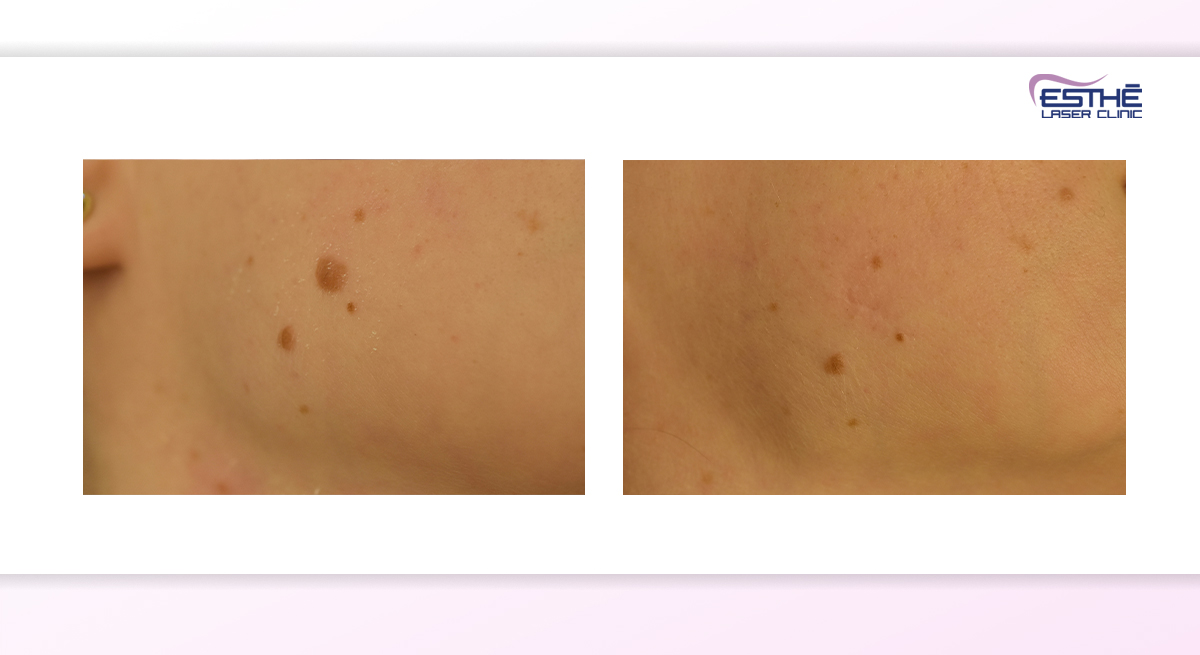
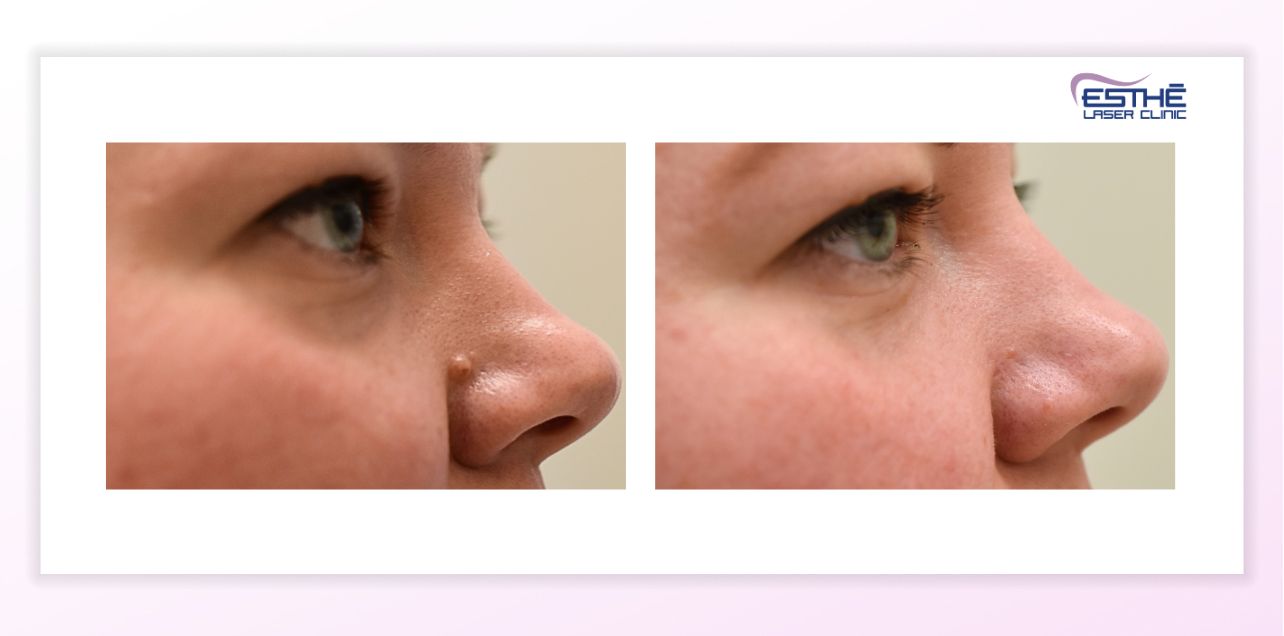
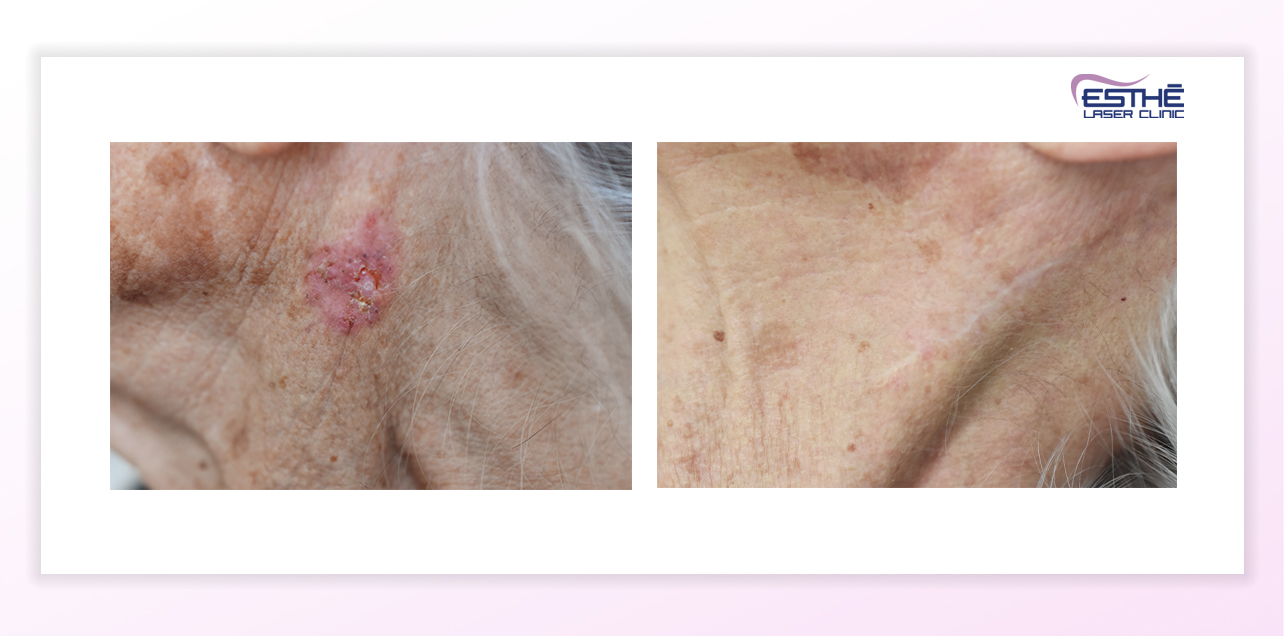
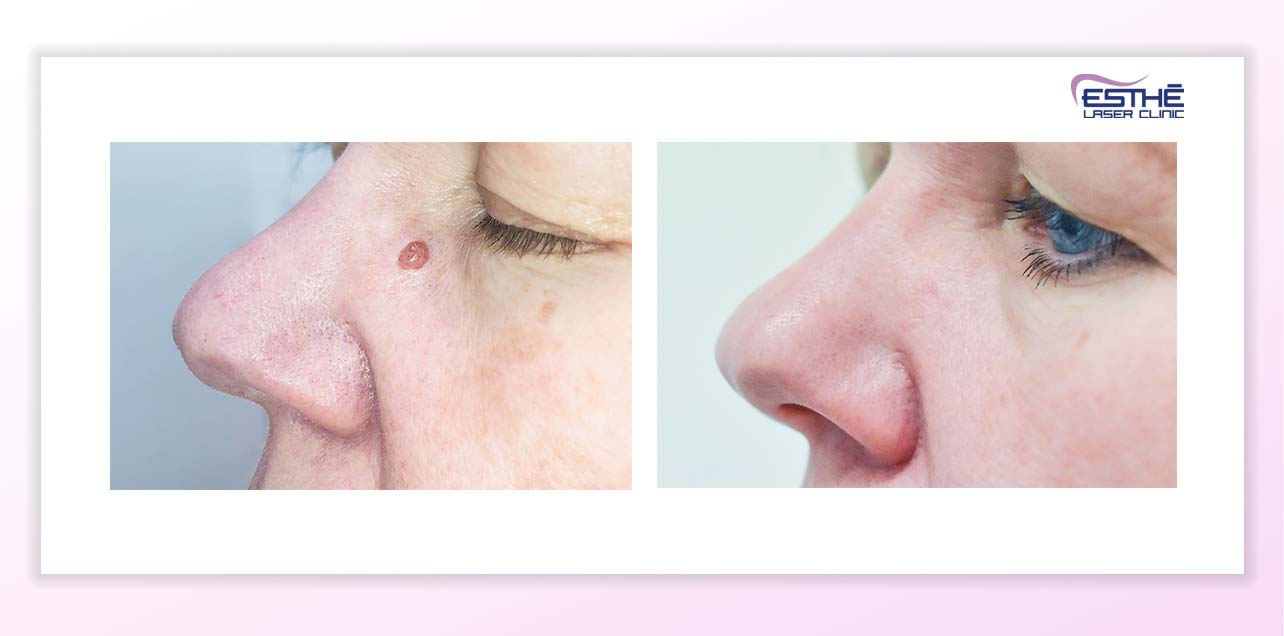
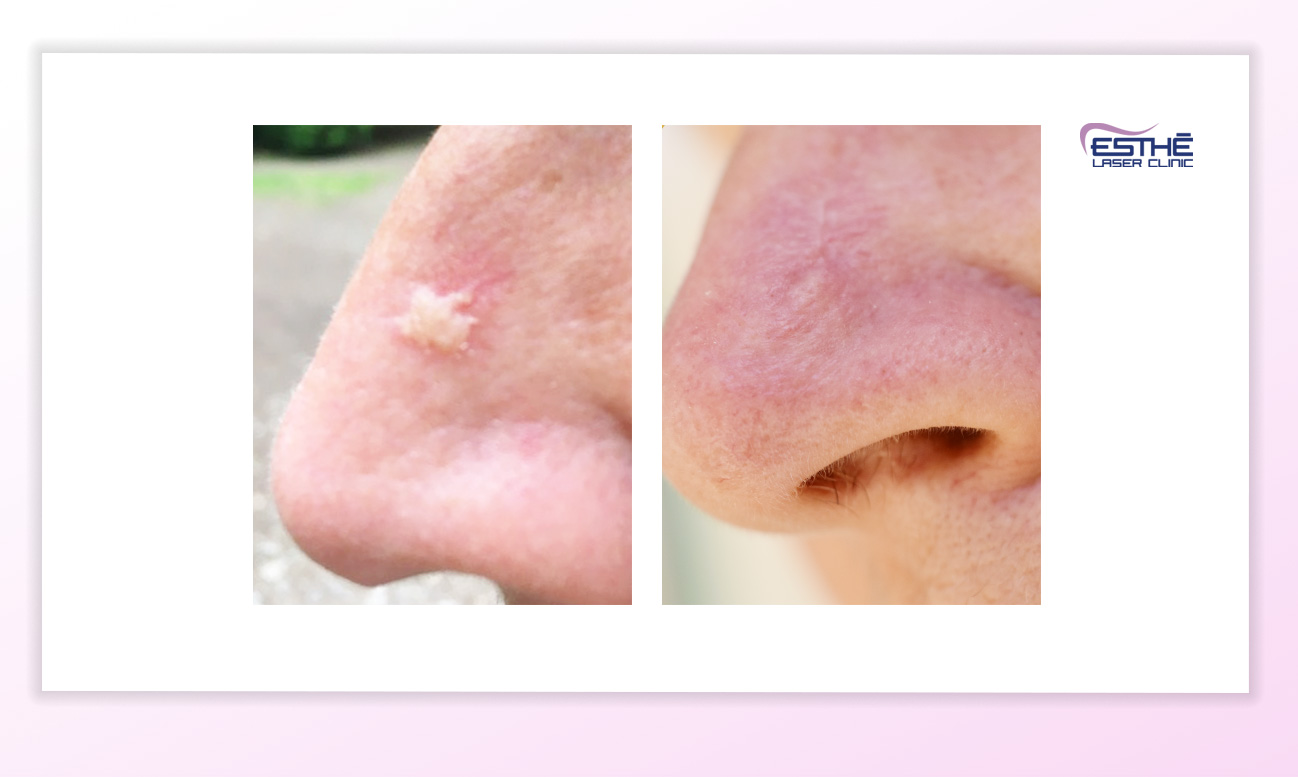


How We Remove Moles or birthmarks
We recommend removing a mole if it behaves or appears suspicious. Naturally, we can also remove it if it causes discomfort, gets in the way, or is aesthetically bothersome.
We carefully assess each mole and, depending on its nature, offer the following options:
- Removal with an alexandrite laser – Ideal for removing common freckles. A precisely targeted 755 nm laser beam breaks the pigment into tiny particles, which are then cleared from the body through the lymphatic system.
- Removal with an erbium laser – This laser is suitable for certain raised skin moles and lesions, as it vaporises the tissue directly. It leaves a superficial wound which, once healed, is often barely visible.
- Surgical removal – We recommend excision, for example, when histological examination is required. Our clinic works with highly skilled surgeons, whose precise technique leaves only minimal scarring.
Malignant melanoma is one of the most aggressive skin cancers, but when detected early, it is fortunately highly treatable. Regular mole checks are therefore one of the most effective forms of prevention. Dermatoscopic examination can reveal changes at an early stage, when they are practically impossible to notice with the naked eye.
FAQ – Frequently Asked Questions About Mole Examinations
We recommend a preventive mole check at least once a year. For clients at higher risk — for example, those with a large number of moles, fair skin, or a family history of melanoma — we may recommend more frequent check-ups.
No. The dermatoscope is simply placed against the skin, and the examination is completely painless.
Dermoscopy can identify suspicious changes in a mole with a high degree of accuracy. However, a definitive diagnosis is always confirmed by histological examination after the mole has been removed.
No. Most moles are completely harmless. We recommend removal only for those that show suspicious signs or change over time. Of course, we can also help remove moles that bother you physically or aesthetically.
Yes. Moles can change due to age, hormonal changes, or sun exposure. This is why regular monitoring is important.
If you check your moles regularly, you will be more likely to notice when it is time to show one to a doctor. A simple rule can help guide you.
The ABCDE Rule for Identifying Suspicious Moles
- A – Asymmetry
- A healthy mole is usually symmetrical. If it has an irregular or uneven shape, it should be checked.
- B – Border
- A suspicious mole may have irregular, jagged, or blurred edges.
- C – Colour
- If a mole contains several shades — for example light brown, dark brown, black, or reddish tones — this may be a warning sign.
- D – Diameter
- Moles larger than approximately 6 mm should be monitored regularly, especially if they continue to grow.
- E – Evolution
Any change in the appearance of a mole — growth, changes in colour or shape, itching, or bleeding — is a reason to seek professional examination.
If you notice any of these signs, please book an appointment at our clinic.
Price list
| Examination by digital dermatoscope | Price |
|---|---|
| Initial examination | 2,400 CZK |
| Examination | 2,400 CZK |
| Alexandrite laser (pigmentation, naevi) | Price |
|---|---|
| Minor procedure | 2,900 CZK |
| Procedure | 3,700 CZK |
| Major procedure | 5,700 CZK |
|
Price | |
|---|---|---|
| Small excision | 3,000 CZK | |
| Medium excision | 3,000 - 4,200 CZK | |
| Major excision | from 6,000 CZK | |
| Histological examination - 1-2 samples | 1,400 CZK | |
| Histological examination - 3-4 samples | 1,600 CZK |
| Erbium laser | Price |
|---|---|
| 1 - 2 minor laser procedures | 2,900 CZK |
| 3 - 5 minor laser procedures | 2,900 - 4,500 CZK |
| 6 - 10 minor laser procedures | 4,500 - 6,500 CZK |
| 10 - 20 minor laser procedures | 6,500 - 9,900 CZK |
| 20 + minor laser procedures | from 10,000 CZK |